

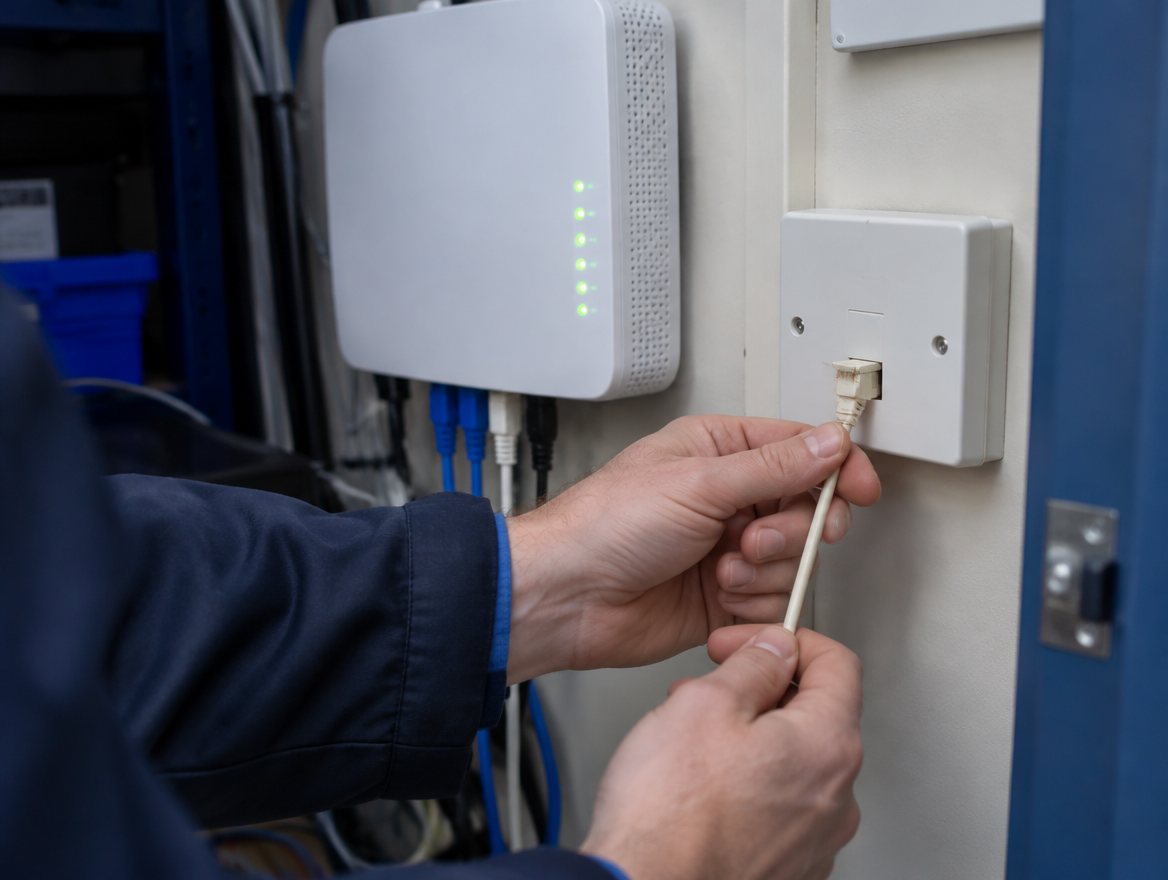
The UK's old copper phone network closes for good on 31 January 2027. That is around fifteen weeks away. If your business still has analogue lines or ISDN, they will stop working on that date unless they have been moved to a digital service.
For most businesses the move is straightforward. The risk is not usually your main phone system. It is the lines nobody remembers: the alarm panel, the lift phone, the card machine in the back office. This guide explains what is changing, what is affected and how to get every line moved in time.
Key takeaways
- The PSTN and ISDN networks close on 31 January 2027, and the date will not move again.
- New analogue lines have not been sold since September 2023.
- Alarms, lifts, card machines and fax lines are the most commonly missed.
- You can keep your existing phone numbers when you move to VoIP.
What is the PSTN switch off?
The Public Switched Telephone Network, or PSTN, is the copper network that has carried UK phone calls for decades. ISDN, the digital service many businesses use for multiple lines, runs on the same network. Both are being retired by Openreach and replaced with an all-IP network, where calls travel over the internet instead.
The old network is expensive to maintain, increasingly unreliable and cannot support the speeds modern businesses need. Running two networks side by side is no longer practical, so the copper voice network is being switched off.
When it happens
September 2023: stop sell
New analogue lines and ISDN stopped being sold across the UK. Existing lines kept working, but you cannot order new ones or upgrade them.
December 2025: original deadline
The first planned closure date. It was pushed back to give more time to protect vulnerable people who rely on telecare alarms.
31 January 2027: final closure
The PSTN and ISDN close for good. Openreach has been clear that this date is final. Any line that has not moved will stop working.
What is affected
Anything that uses a traditional phone line needs checking. In most businesses that means more than just the phones on desks.
- Analogue phone lines and ISDN2 or ISDN30 lines
- Older on-site phone systems that connect to those lines
- Intruder and fire alarm panels that dial out to a monitoring centre
- Lift emergency phones and door entry systems
- Card payment terminals that use a phone line
- Fax machines and franking machines
- Broadband that still relies on an analogue line
The phones are easy to spot. The devices in cupboards and plant rooms are the ones that catch businesses out, often because they were installed years ago by a different supplier.
How to prepare
With the deadline close, demand for engineers and number porting is rising. A simple plan now avoids a rush later.
Find every line
Check your phone bills for every number you pay for, then match each one to what it is used for. Any number you cannot account for needs investigating before it is cancelled.
Check your devices
Ask your alarm, lift and card machine suppliers whether their equipment will work on a digital line. Some units only need reconfiguring. Others need replacing or moving to a 4G or 5G connection.
Upgrade your connection
Make sure your internet connection is ready to carry voice. For most offices that means business broadband on SOGEA or full fibre. Larger sites may need a leased line for guaranteed performance.
Move your numbers
Port your existing numbers to a VoIP system so customers can still reach you on the numbers they know. Allow a few weeks for this.
Test before the deadline
Once everything has moved, test every line and device. Make a test call to your alarm monitoring centre and run a card payment before you rely on it.
What to move to
For most businesses the replacement is a cloud-based VoIP phone system. Calls run over your internet connection, so there is no phone line to maintain and no expensive hardware on site.
VoIP is not just a like-for-like swap. Your team can take calls on a desk phone, a laptop or a mobile app, from the office or at home. You get call recording, voicemail to email and the ability to add or remove users in minutes. Most businesses also find their monthly costs come down compared with ISDN.
Getting started
The PSTN switch off is a fixed deadline, but it does not need to be stressful. Find every line, check your devices and give yourself time to move your numbers. Done in that order, most businesses switch with no downtime at all.
Frequently asked questions
When is the PSTN switch off?
The PSTN and ISDN networks close on 31 January 2027. The original date was December 2025, but it was pushed back to give vulnerable telecare users more time. Openreach has said the new date will not move again.
Can I keep my business phone number?
Yes. Your existing numbers can be moved, or ported, to a new VoIP system. Porting takes time, so start early rather than in the final weeks.
Will my broadband stop working?
Not if it is moved to a digital service in time. Broadband that relies on an old analogue line needs to move to SOGEA or full fibre. If nothing is done, some services could be disrupted when the voice network closes.
What about alarms, lifts and card machines?
Any device that dials out over a phone line needs checking. Many can be moved to an IP or 4G/5G connection, but some older units need replacing. These hidden lines are the most common thing businesses miss.
What happens if we do nothing?
Lines that have not been migrated will stop working when the network closes. That means no incoming or outgoing calls on those lines, and any connected alarms or terminals going offline.